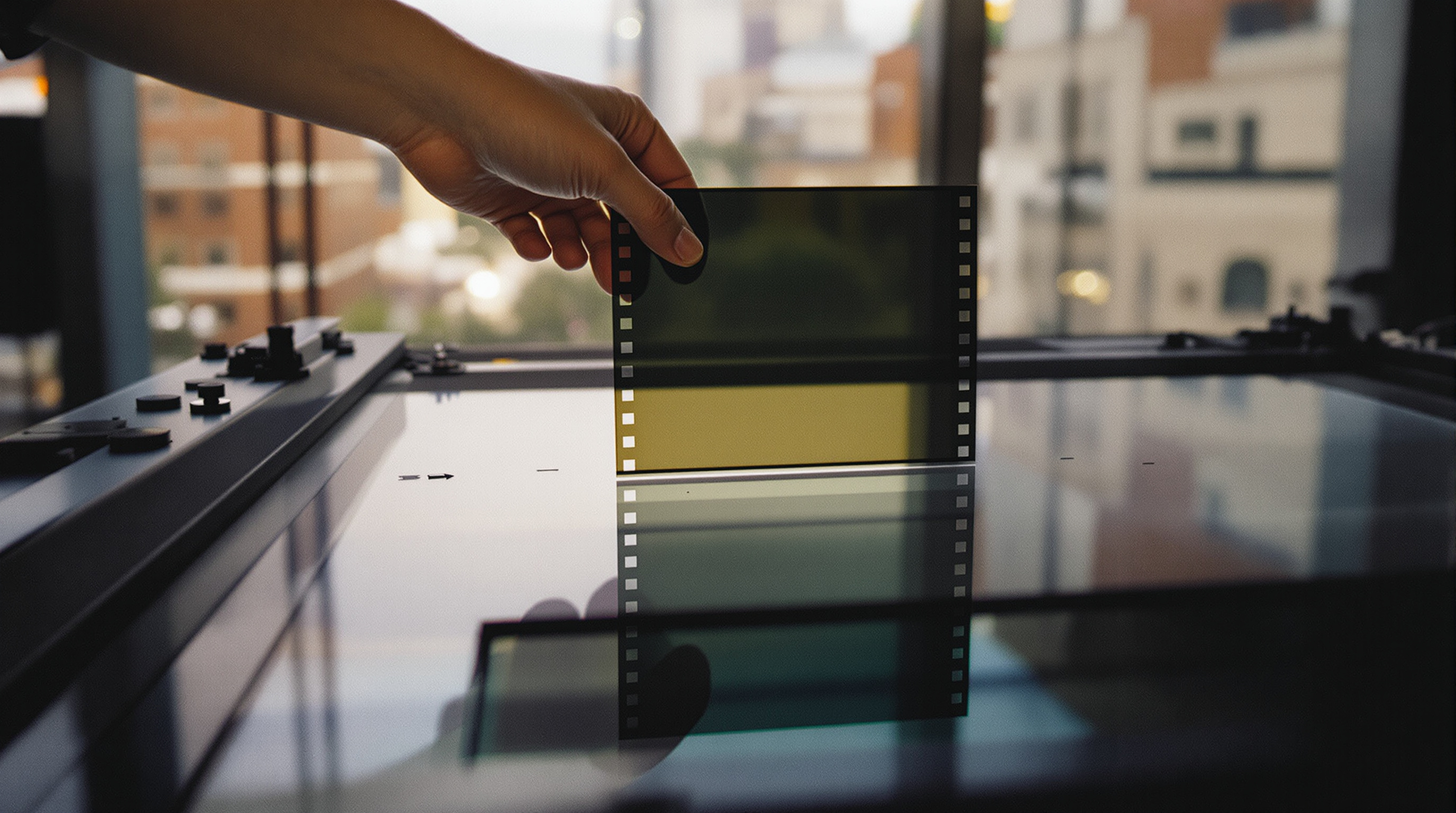
Every roll of film holds irreplaceable memories — family milestones, weddings, vacations, and everyday moments frozen in time. But film degrades. Colors fade, negatives warp, and slides collect dust. Film scanning converts analog film — 35mm negatives, slides, or medium format rolls — into high-resolution digital files that last forever. If you're in Louisville, KY, professional film digitization services are closer than you think.
What Is Film Scanning and How Does It Work?
Film scanning uses specialized equipment — either a flatbed scanner with a transparency adapter or a dedicated film scanner — to capture the image stored on analog film as a digital file. Unlike simply photographing a negative, a true film scan reads the film's grain structure at a microscopic level, preserving fine detail that would otherwise be lost.
Resolution is measured in DPI (dots per inch). For 35mm film — a frame of approximately 36mm × 24mm — a scan of 2,000 to 4,000 DPI is standard to high quality. At 4,000 DPI, a 35mm negative yields roughly 5,380 × 3,620 pixels, equivalent to about 19 megapixels. Professional-grade scans can push to 6,300 DPI or higher, extracting virtually all detail the film grain can hold.
Flatbed Scanners
e.g. Epson Perfection V800/V850
Versatile and capable of handling multiple film formats. Excellent for medium and large format film, and capable of very high resolution at an accessible price point.
Dedicated Film Scanners
e.g. Nikon Coolscan series, Plustek OpticFilm
Designed exclusively for film. Often deliver superior sharpness and dynamic range for 35mm and APS formats due to purpose-built optics.
Why High-Resolution Film Scanning Matters
The quality of a film scan directly determines how you can use the resulting image. A low-resolution scan may be fine for social media, but it falls apart when printed. A high-resolution scan at 3,000–4,000 DPI or above allows you to:
- Print large-format photos (16×20 inches and beyond) without loss of detail
- Crop deeply into an image while retaining sharpness
- Archive family history with museum-quality fidelity
- Edit and retouch professionally in Adobe Lightroom or Photoshop
Film — particularly medium and large format — carries an enormous amount of information. A well-scanned 35mm frame from a quality lens rivals or exceeds many modern digital cameras in tonal depth and grain character. This is why photographers, archivists, and families alike invest in professional film digitization rather than relying on basic drug-store scans or smartphone apps. According to DIY Photography, the difference between a 1,500 DPI and a 4,000 DPI scan becomes immediately visible when printing at anything larger than 8×10 inches — an important consideration for anyone planning to display their digitized images as wall art.
Film Scanning Services in Louisville, KY — What to Look For
When searching for film scanning or negative digitization in Louisville, evaluate a provider on more than price alone. Photographers and families across Kentucky — including those in Lexington, Owensboro, Elizabethtown, and Ashland — can access professional film scanning through The Print Refinery Louisville East by mail, making it straightforward to digitize film regardless of where you're located in the state. Here's what matters when choosing a provider:
| What to Ask | Why It Matters |
|---|---|
| Scanner type & max DPI | For archival work, you want at least 3,000 DPI for 35mm. Ask whether they use flatbed or dedicated film scanners. |
| File format options | TIFF (uncompressed) is best for archiving; JPEG is fine for sharing. A reputable lab offers both. |
| Dust & scratch removal | Professional services often apply Digital ICE or similar infrared technology — especially valuable for older negatives. |
| Turnaround time | Local Louisville labs typically offer faster turnaround than national mail-in services — a key advantage for time-sensitive projects. |
| Film format compatibility | Confirm the lab supports your format — 35mm, 120 medium format, APS, or 110 — before dropping off. |
Local Louisville film labs that specialize in film-to-digital conversions often combine scanning with printing services, letting you walk away with both digital files and physical prints in a single visit. Once your film is digitized, professional photo prints from your scanned negatives are available in a wide range of sizes and finishes — from standard prints to large-format canvas and metal wall art.
How to Prepare Your Film for Digitization
A little preparation before your drop-off goes a long way — for you and the lab.
1 Sort & Organize
Group film rolls, strips, or slides by format and, if possible, by approximate date or event. This helps both you and the lab manage the project efficiently.
2 Store Properly Before Scanning
Keep film in a cool, dry, dark environment. Avoid plastic bags that can trap moisture. Archival negative sleeves are ideal for transport.
3 Flag Special Concerns
If certain negatives are damaged, stuck together, or particularly valuable, set them aside and let the technician know so they can handle them with extra care.
4 Decide on Resolution in Advance
Printing large? Request 3,000–4,000+ DPI. Sharing digitally or viewing on screen? 1,500–2,000 DPI may be sufficient and more cost-effective.
5 Confirm Your Delivery Format
Will you receive files on a USB drive, via cloud download link, or both? Confirm this before committing to a service.
Digitize Your Memories Before They Fade
Film scanning bridges the past and the future — transforming fragile, aging negatives into permanent, versatile digital files that can be stored, shared, and printed for generations. Whether you have a single roll of 35mm or decades of family negatives waiting to be digitized, professional services in Louisville, KY offer the expertise, equipment, and care your memories deserve. The Print Refinery Louisville East — part of the The Print Refinery network — provides dedicated negative scanning services for film photographers and families across Kentucky. Don't wait for film to fade — digitize it today.