Complete Film Developing Guide in Louisville
T.K. Broecker / 8 March 2026
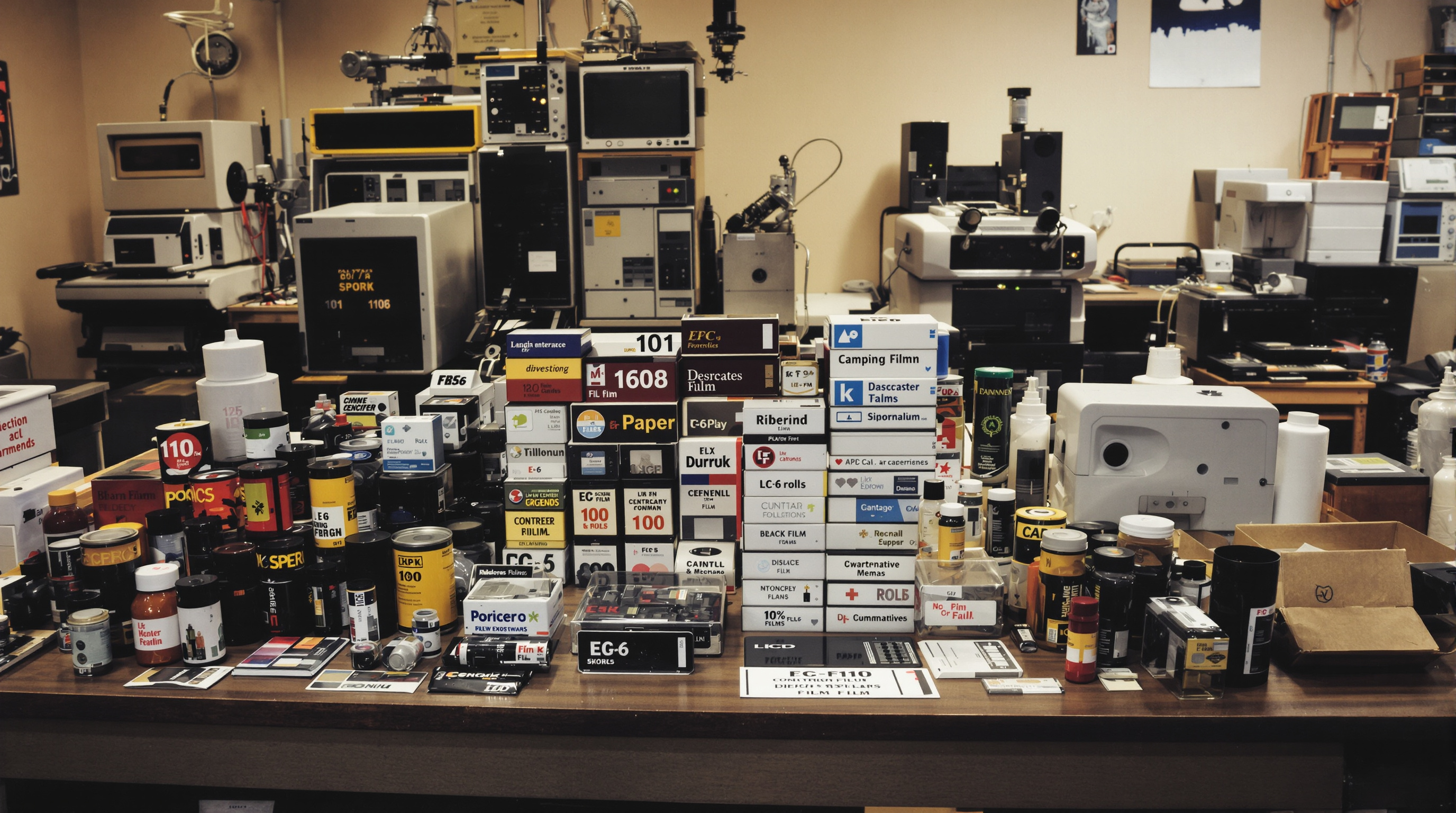
Film Developing in Louisville: APS, 110, 126, E-6, B&W, 120, & Disposables
In an age of digital photography, analog film continues to experience a remarkable revival. Louisville photographers seeking to develop APS, 110, 126, E-6 slide film, black and white, 120 format, or disposable cameras have several specialized options available. This guide explores the complete film developing landscape in Louisville, Kentucky, helping you navigate between format-specific processing services and the choice between digital scans versus traditional prints.
APS Film Developing in Louisville
Advanced Photo System (APS) film, introduced in 1996, offered convenient features like multiple print formats and mid-roll film change capabilities. Though discontinued in the early 2000s, Louisville still hosts specialized labs equipped to handle this nostalgic format.
Where to Develop APS Film in Louisville
- Murphy's Camera on Bardstown Road maintains legacy equipment for processing discontinued formats like APS
- The Photo Lab at the University of Louisville offers specialized processing for academic and archival purposes
- Louisville Film Lab provides dedicated development services for various legacy formats
Finding 110 and 126 Film Developing Services Near You
The pocket-sized 110 cartridge film (introduced by Kodak in 1972) and square-format 126 Instamatic film (popular from 1963-1988) present unique processing challenges due to their uncommon formats. While harder to find, several Louisville establishments still accommodate these vintage formats.
Local 110 Film Processing Options
- Spectra Photo Services specializes in obsolete film formats with custom development
- Old Louisville Film Processors offers twice-weekly batch processing for 110 cartridges
- Mail-order options with Louisville drop-off points like Kentucky Film Society
126 Film Development Services
- Vintage Camera Works in downtown Louisville processes 126 film in-house
- Photography Archives at Louisville Visual Arts handles archival-quality development
- Churchill Downs Photography Club maintains equipment for members' use
E-6 Slide Film Processing in Kentucky
E-6 processing, the chemical development method for color reversal (slide) films like Fujichrome and Ektachrome, requires precision and specialized equipment. Unlike negative film, E-6 creates positive transparencies ideal for projection or direct viewing.
Premier E-6 Processing Locations in Kentucky
- Louisville Darkroom Society offers professional-grade E-6 processing with strict temperature controls
- Kentucky Photography Museum provides archival-quality development for preservation purposes
- Bluegrass Film Lab specializes in E-6 with custom processing options for pushing/pulling exposure
- Paul's Photo Processing maintains dedicated chemistry for fresh E-6 results
Black and White, 120, and Disposable Camera Development with Digital Options
Black and white film development requires different chemistry than color processing, while medium format 120 film demands careful handling for its larger negatives. Disposable cameras, meanwhile, need specialized equipment for opening without damaging the film inside.
- Analog Artisans offers traditional darkroom printing alongside development
- Highland Photography processes various black and white films with customized development times
- Louisville Photography Center provides push/pull processing options for specific artistic effects
- Medium Format Louisville specializes in 120 film with high-resolution drum scanning
- Bardstown Road Film Lab offers development with 6K digital scanning options
- Kentucky Center for Photography provides professional development with custom scan resolutions
- Quick Prints on Market Street offers same-day service for disposable cameras
- Student Camera Shop near University of Louisville provides budget-friendly options
- Most local drugstores still maintain basic film processing services for disposables
Digital Scans vs. Prints
When choosing between digital scans and traditional prints, consider your intended use. Digital scans offer flexibility for online sharing, editing, and reprinting, typically available in resolutions from basic 2000×3000 pixels to professional 6000×9000 scans. Traditional prints provide tangible results with unique characteristics that digital often can't replicate, available in standard sizes from 4×6 to enlargements. Many Louisville labs offer combination packages providing both scans and prints at a slight discount compared to ordering each separately.
Conclusion
Louisville's film development scene offers comprehensive services for photographers working with APS, 110, 126, E-6, black and white, 120, and disposable camera films. Whether you're seeking specialized processing for rare formats or deciding between digital scans and traditional prints, the city provides options to meet every analog photographer's needs. By supporting these local film processing businesses, Louisville photographers contribute to preserving the technical expertise and specialized equipment necessary to keep film photography alive for future generations.